


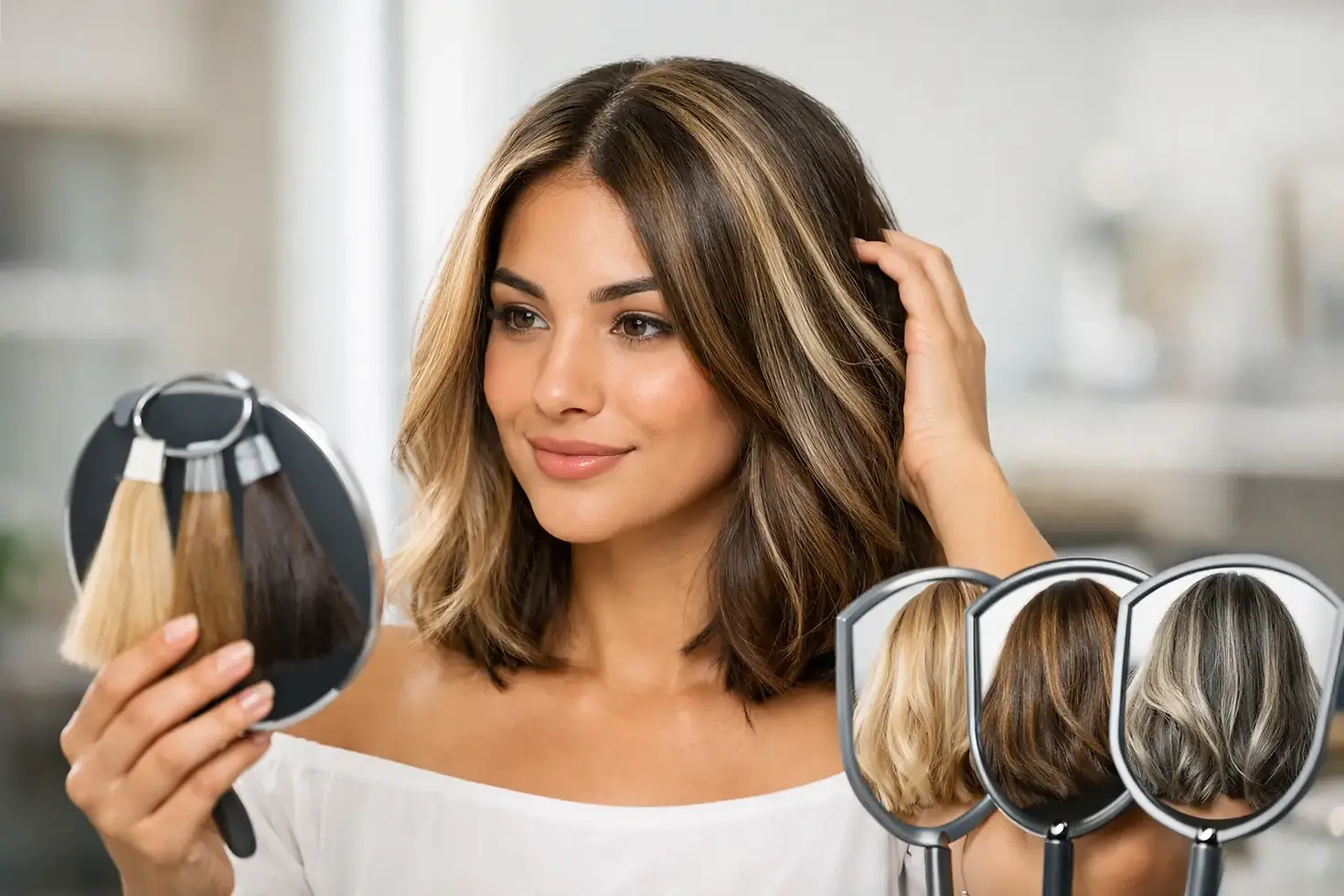
How to Choose Hair Highlights That Suit You
A few thoughtfully placed ribbons of color can brighten your entire look. The secret to how to choose hair highlights is not picking the lightest shade on the inspiration photo. It is choosing a placement, tone, and level of contrast that flatter your features while still fitting the way you wear and care for your hair.
The right highlights should look beautiful when you leave the salon and feel wearable weeks later. Whether you want a soft, sunlit refresh or a more noticeable dimension, a personalized color consultation helps turn a saved photo into a result that feels unmistakably like you.
How to Choose Hair Highlights for Your Features
Start with the effect you want to see in the mirror. Highlights can make hair appear fuller, bring warmth to the complexion, define a haircut, or simply add movement to one-dimensional color. A colorist considers all of those details together rather than choosing a shade in isolation.
Consider your natural base color
Your natural or current base color sets the foundation. Brunettes often look especially polished with caramel, honey, chestnut, mocha, or soft beige ribbons, depending on whether they prefer warmth or a cooler finish. Darker hair can support brighter pieces near the face, but lifting every strand too light may create a harsh contrast or require more frequent toning.
Blonde hair offers a wide range of possibilities, from buttery and golden to beige, pearl, and icy. The best blonde is not automatically the palest one. A dimensional blonde with lowlights and delicate brightness can look richer, healthier, and more natural than a single, ultra-light shade.
For red, auburn, or copper-based hair, cinnamon, strawberry, gold, and soft apricot tones can create beautiful depth. These shades tend to fade faster than many brunette or blonde formulas, so maintenance should be part of the decision from the beginning.
Let your skin tone guide the direction
Skin tone is useful guidance, not a rigid rule. Warm undertones often pair beautifully with golden, honey, caramel, copper, and warm beige highlights. Cooler undertones may be complemented by ash brown, mushroom, cool beige, pearl, or icy tones. Neutral undertones can usually wear either direction, which gives you room to choose based on your personal style.
The color around your face matters most. Face-framing highlights sit close to the skin, so they can either make the complexion look fresh and luminous or make it appear washed out. If you are unsure, a soft neutral shade is often a refined place to start. It offers brightness without committing fully to a very warm or very cool result.
Your eye color can also influence the finished look. Warm caramel and gold tones can make hazel, green, and brown eyes look especially rich, while cooler beige and ash tones can create a striking contrast with blue or gray eyes. These are finishing details, not rules, but they help a colorist customize the look.
Match the highlights to your haircut and texture
Highlights are not only about color. Placement changes the shape and movement of a cut. Fine, closely woven highlights can create the appearance of fuller hair, especially when paired with a layered cut or polished blowout. Wider ribbons can make a stronger statement and show off waves, curls, or long layers.
Straight hair reveals every detail of color placement, which makes soft blending especially valuable. Wavy hair often carries lived-in balayage beautifully because the bends catch the lighter pieces naturally. Curly and coily hair can look stunning with strategically placed brightness, but placement should respect the curl pattern so the color appears balanced when hair is worn naturally.
A short haircut may benefit from a few carefully placed highlights that create texture rather than an all-over lightening session. Longer hair can handle more gradual dimension through the mids and ends. Bring photos of your hair both styled and natural to your consultation, since your everyday texture should guide the color plan.
Choose the Right Highlighting Technique
The same shade can look completely different depending on the application. Understanding the broad options makes it easier to explain what you want and what level of upkeep feels realistic.
Traditional foil highlights
Foil highlights create controlled, consistent brightness from close to the root through the lengths. They are a lovely option if you want a more polished, noticeable blonde effect, clear dimension, or significant lightening. Foils can be customized with fine or bold sections, so they are not limited to one look.
The trade-off is maintenance. Because the brightness begins nearer the scalp, regrowth becomes visible sooner than it does with a more blended technique. Clients who enjoy a fresh, bright finish and do not mind regular salon visits often love this approach.
Balayage and painted highlights
Balayage is hand-painted to create a softer transition from deeper roots to lighter ends. It is ideal for a lived-in, sun-kissed effect and can grow out gracefully. Many guests choose balayage because it gives them brightness without a strong line of regrowth.
That does not mean balayage is maintenance-free. Toning appointments, glosses, trims, and nourishing care still help preserve the shine and tone. Also, if your goal is an evenly light blonde from root to end, traditional foils or a foilayage technique may be a better fit than balayage alone.
Face-framing highlights and money pieces
A face frame brings light around the hairline for an immediate, radiant effect. It can be subtle and blended or bold and high-contrast. This choice is especially effective if you want a visible change without coloring every section of your hair.
A bright money piece makes more of a statement, while a soft face frame feels understated and elegant. The right choice depends on your comfort with contrast, how often you wear your hair pulled back, and whether you want your color to feel timeless or more trend-forward.
Babylights and lowlights
Babylights are very fine, delicate highlights that mimic the softness of naturally lightened hair. They are wonderful for clients who want gentle brightness, especially around the face and crown. Lowlights add deeper pieces back into the hair, creating contrast and preventing blonde or overprocessed hair from looking flat.
Often, the most natural-looking color includes both light and shadow. More highlights are not always better. Leaving depth at the root and throughout the interior of the hair gives the lighter pieces room to stand out.
Be Honest About Maintenance and Hair Health
The most flattering highlight plan is one you can maintain comfortably. Before your appointment, think about how often you are willing to return for color, whether you use heat styling, and how much time you want to spend on home care.
If you prefer appointments every few months, blended balayage, soft babylights, or subtle face-framing color may suit you best. If you love a bright root-to-end blonde and are comfortable with more frequent touch-ups and toning, foils can deliver that crisp, high-impact finish.
Your hair history matters just as much. Previous box color, dark dye, bleach, smoothing treatments, and fragile ends can affect how quickly and evenly hair lightens. Be candid with your colorist, even if the color was applied months ago. That information protects the integrity of your hair and helps set realistic expectations for timing and results.
Healthy-looking hair reflects light better, holds a gloss more beautifully, and gives highlights a more luxurious finish. Professional shampoo and conditioner, a heat protectant, occasional masks, and regular trims all support your investment in color. If your scalp feels dry, congested, or stressed, restorative scalp care can also complement your color routine by creating a healthier foundation for beautiful hair.
Bring Inspiration, Then Leave Room for Personalization
Photos are helpful, but they work best as a conversation starter. Save a few images that show what you like: the brightness around the face, the softness of the blend, the warmth or coolness of the tone, or the amount of contrast. It is equally helpful to identify looks you do not want, such as chunky stripes, overly golden tones, or very pale ends.
A photo may feature a different natural base, density, texture, or lighting than your own hair. Instead of asking for an exact copy, describe the feeling you want: soft and expensive-looking, bright but natural, warm and glossy, or cooler with dimension. A skilled colorist can translate that direction into a plan that suits your hair.
At CJ Beauty Hair Salon, highlight services are designed around that personal balance of fashion-forward color and healthy-looking hair. Your appointment should feel like time set aside for both a refreshed look and a little restoration.
Choose highlights that make you feel brighter, not busier. When the shade, placement, and maintenance plan all fit your real life, your color becomes an effortless part of your confidence every day.


Comments